Photographing a Total Solar Eclipse
Photographing a total solar eclipse might sound easy on paper, but in practice, there was a lot of planning and a small element of luck involved. This is my story of how I came to witness and photograph one of nature’s greatest shows.
Total Solar Eclipse, Burgos, Spain - 2026
It all started back in 2025 when I received a message from a friend asking if I would be interested in a trip to Spain for the eclipse. As the UK won’t get another total solar eclipse until 2090 (so I’m unlikely to ever see one from home), I knew this was something that couldn’t be missed.
A few months passed before we decided it was time to start planning. We picked some dates, booked time off work, sorted flights to Madrid and booked our accommodation. The easy part was done!
Next, we needed to decide on a location. Looking at the map below, we quickly realised that Madrid lies just outside the line of totality, so deciding where to go would ultimately determine our best chance of seeing the eclipse. Having already ruled out Iceland due to the high chance of cloud cover, and Mallorca because the eclipse would be too close to the horizon, mainland Spain seemed the obvious choice, with its dry, desert-like landscape.
Map showing the line of totality
The mountains around Bilbao presented us with a dramatic landscape, but again, as we needed the best possible chance of a clear sky, we had to rule this location out. The obvious choices then became Lerma or Burgos. With both being relatively easy to reach from Madrid, a low chance of cloud cover and unobstructed views towards the western horizon, Burgos ticked all the boxes.
From further research, we discovered there were three hills around Burgos that would provide great locations to witness the eclipse from. Our decision was made: Burgos it was. We also decided to rent a car, as this would give us the flexibility to relocate if the weather or conditions changed.
Following a few days exploring Madrid, the day of the eclipse was finally upon us. As the eclipse wasn’t scheduled to begin until 19:33 and wouldn’t reach totality until 20:29, we made an early start to make sure we would reach our chosen location with plenty of time to spare. After arriving at our hotel in good time, we had the opportunity to review the forecast and construct our solar filters.
My homemade solar filter
As the hours ticked by and the main event drew ever closer, I was eager to get to our location. However, with it being mid-August, the temperature outside was a scorching 38°C, not exactly an enjoyable temperature to be standing around in. Instead, I used the time to make sure I had everything I needed and that my homemade solar filter was going to do the job.
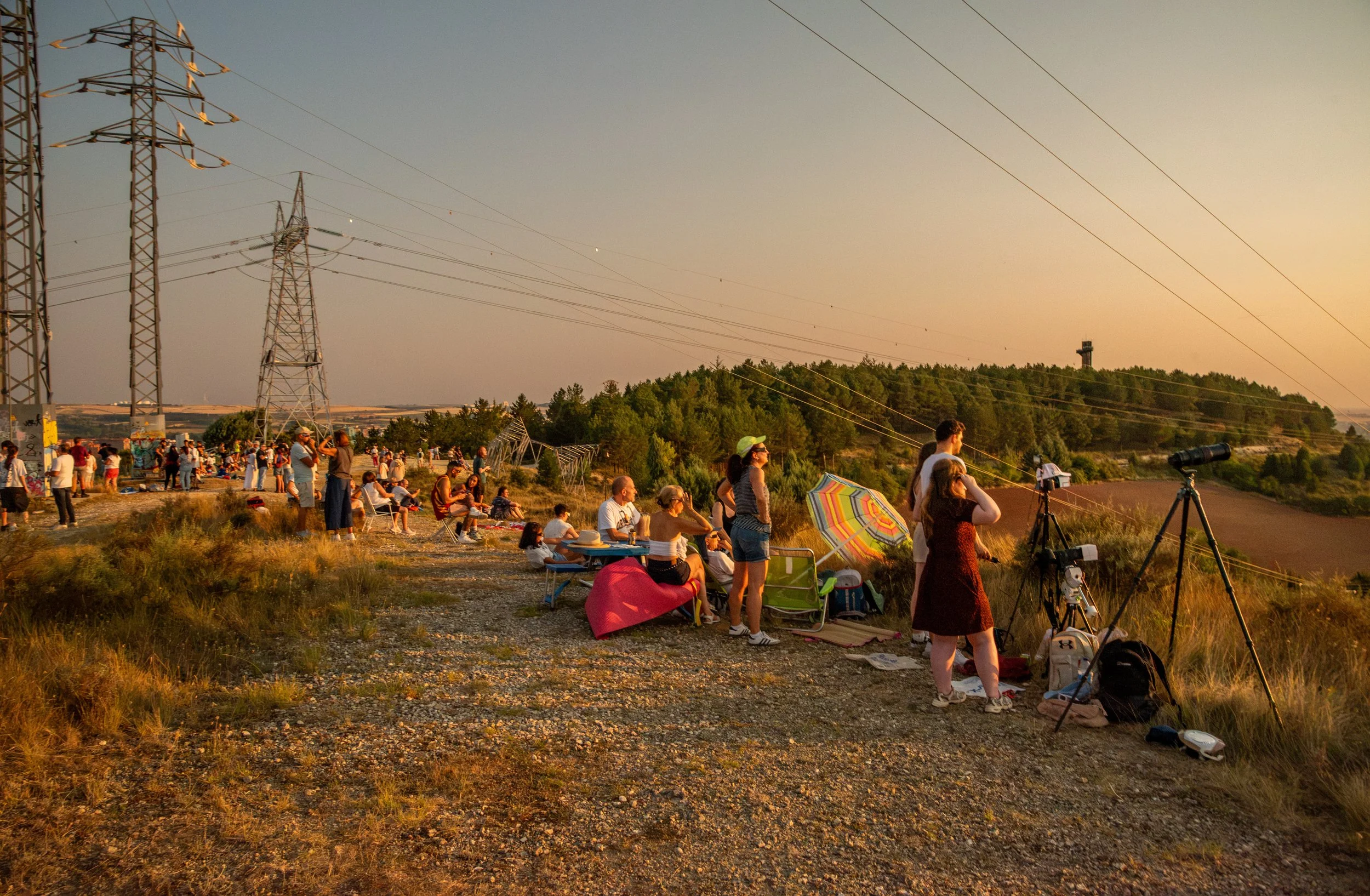
Just after 6pm local time, we made the short drive from our hotel and parked as close as we could to the hill we had identified during our planning. After a steady climb of around 25 minutes, carrying all the photography gear with us, we finally made it to the top.
It was clear from early on that we weren’t the only ones with the same idea. Getting there early enough meant we had plenty of time to set up and find a good spot.
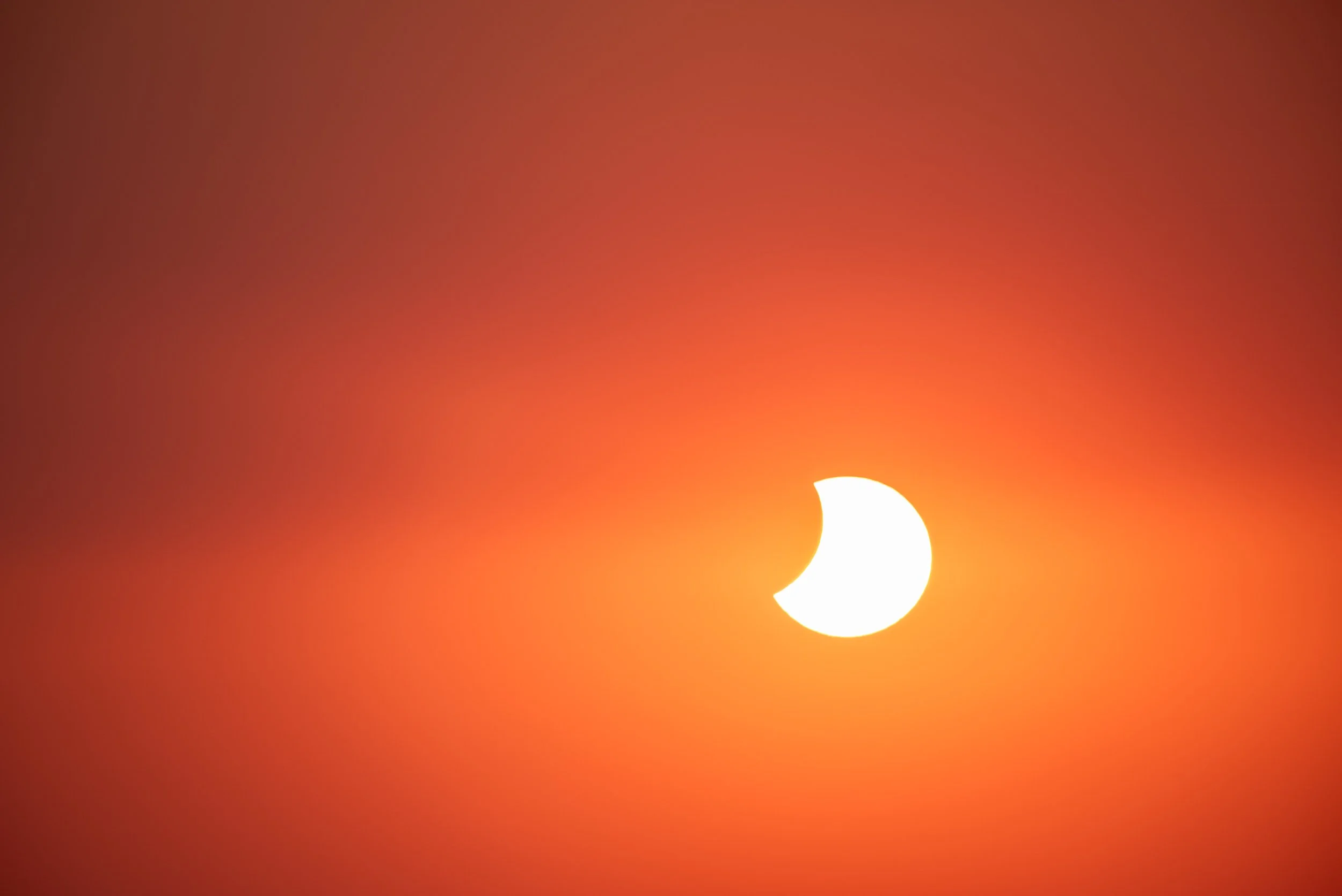
After all the planning and travelling, we were now so close to the spectacle we had travelled so far to see. As the Moon slowly started to pass in front of the Sun, I was clicking the shutter every few minutes, making sure my settings were right, I had plenty of battery and that my filter was working as it should.
Early stages of the elcipse
We were now about five minutes from totality. The sky was clear of cloud, I had everything set up and the light was beginning to fade. A few more photos and I would be ready to remove the solar filter.
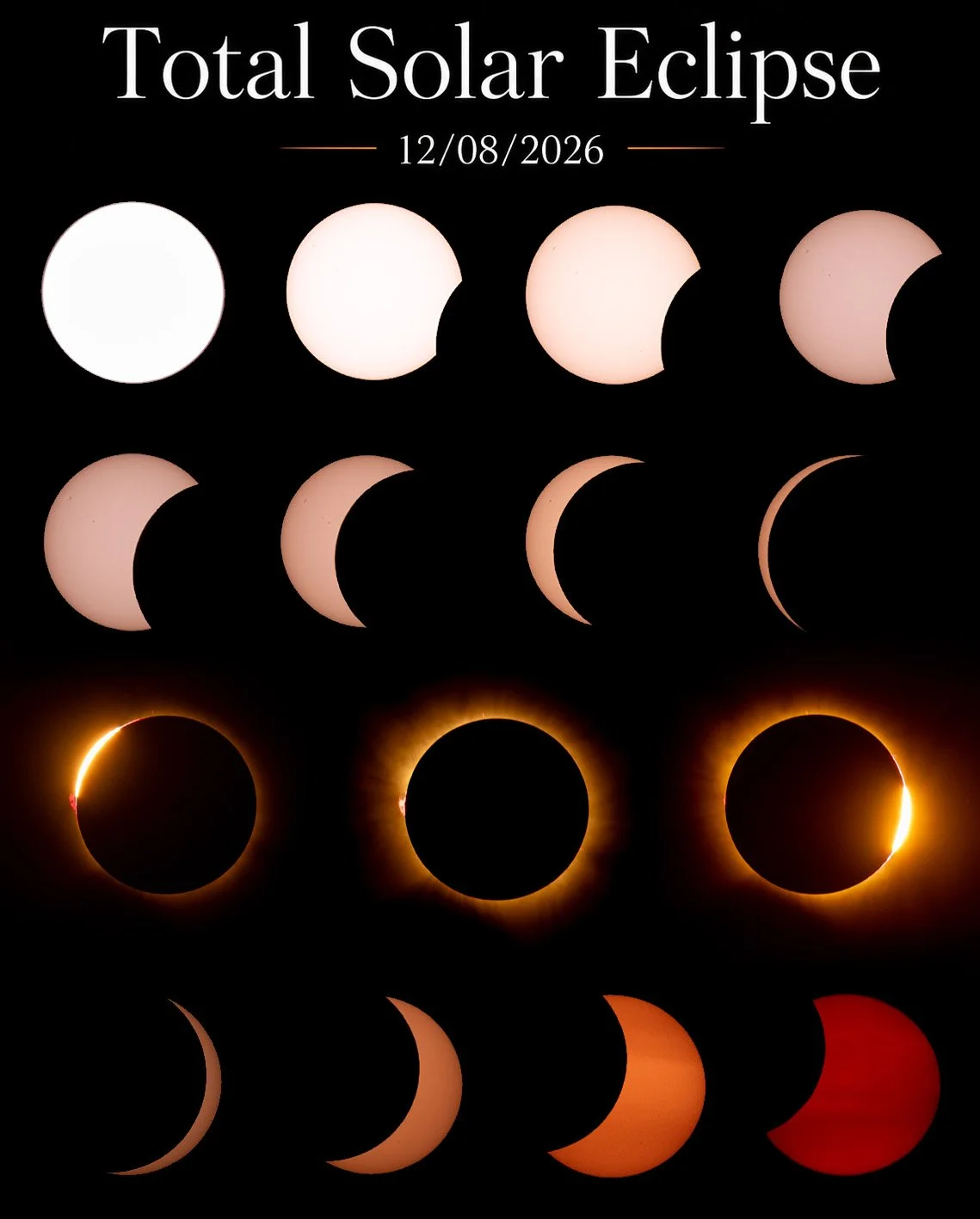
The final few minutes ticked by and the temperature had significantly dropped. About 30 seconds before the Sun was completely covered, I removed my filter and quickly adjusted my settings. I was then able to capture the diamond ring – that small, spectacular flash of light just before the Sun disappears completely.
The diamond ring - Burgos, Spain
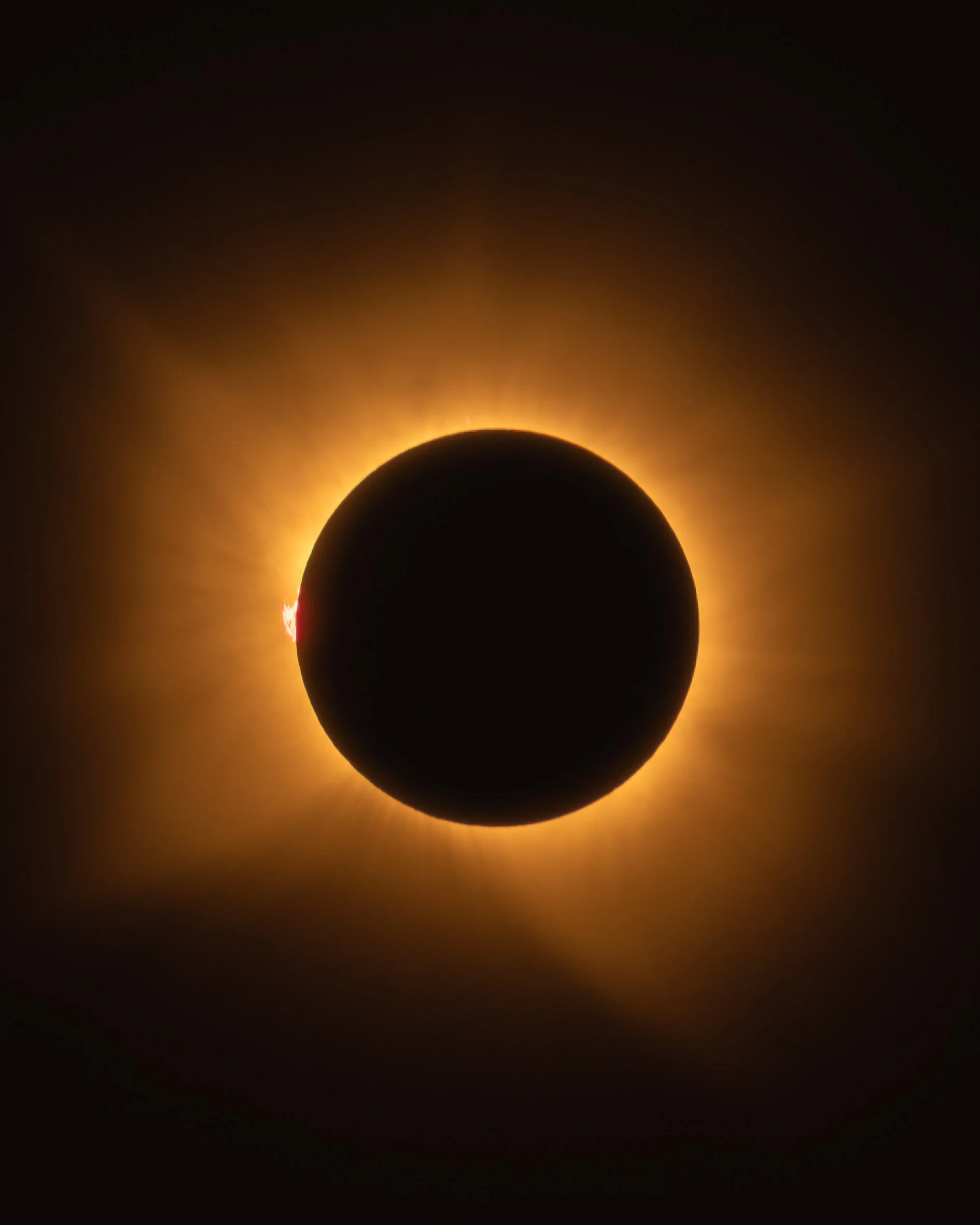
Not a moment later, the Moon moved fully in front of the Sun. The ground went dark, the spectators cheered and we had the moment we had travelled so far for. The total solar eclipse had arrived.
With less than two minutes to capture the perfect shot, I was constantly changing settings and checking that my images were in focus. But amongst all the frantic camera adjustments, I stood back for a brief moment and simply admired what was happening in front of my very eyes.
Hundreds of miles travelled to reach the location, but only moments to enjoy the show.
The total solar eclipse, 12th August 2026
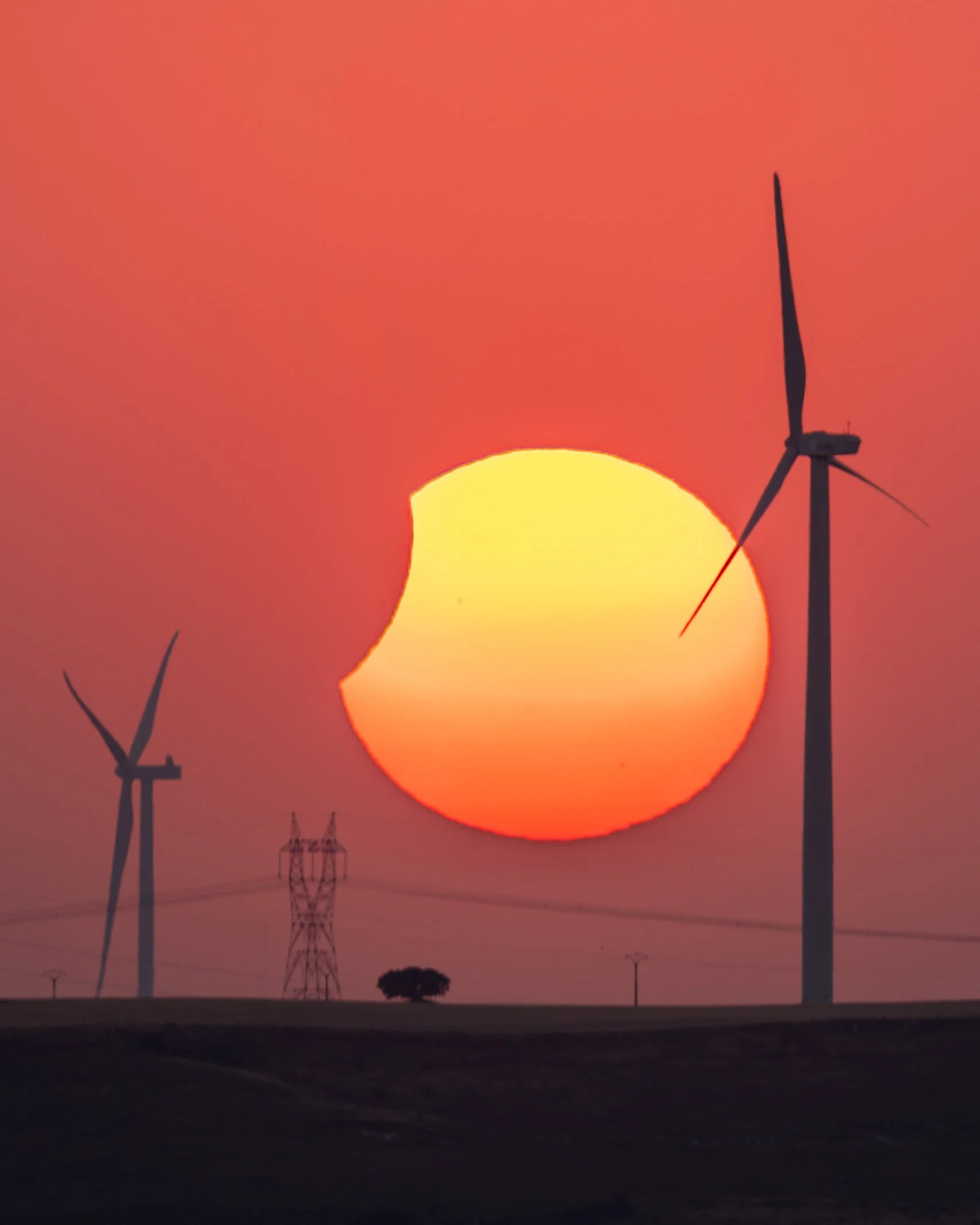
And just as quickly as it had begun, the Moon moved away from the Sun and the light returned. We stayed on the hill as the Sun slowly moved towards the horizon, managing to capture some stunning images of it sitting just above the horizon before it finally disappeared.
After all the planning, travelling, preparation and waiting, it was over. In the end, everything had come together perfectly – the location, the weather and, thankfully, the photography.
It was an incredible experience and one I certainly won’t forget.